
 Blog
Blog Compliance automation turns your check-the-box audit burden into a proactive resilience initiative. With the deadline for NIS 2 compliance approaching on October 18th, 2024, businesses deemed “essential” and “important” entities across the European Union must adapt to more stringent cybersecurity standards, to achieve the goal of a high common level of security across the region.
The NIS 2 Directive, an evolution of the original Network and Information Systems Directive, extends its reach to more industries and imposes stricter security and incident reporting requirements. For affected organizations, ensuring compliance is a legal obligation, but also an opportunity to enhance their cybersecurity posture for continuous operational resilience and stability.
As the Member States establish their supervisory and enforcement activities, enterprises should proactively ensure they comply with the general NIS2 framework to ensure network compliance readiness by the time this Directive is fully transposed to country-specific legislation in October.
For network teams, this means that blind spots and unknowns in your IT network pose a risk of non-compliance, for which the penalties will be decided by the Member States but must be “effective, proportionate and dissuasive” (Article 36). Compliance automation is the answer to the difficult and tedious network data collection and analysis activities necessary for enterprises to meet NIS2 requirements.
What are the Core Requirements of NIS 2?
Gartner has framed the obligations in NIS 2 within several key pillars that organizations must address:
- Cyber Risk Management:
- Implement and maintain policies for risk analysis and security of information systems.
- Ensure security in the acquisition, development, and maintenance of network and information systems, including vulnerability handling and disclosure (Chapter IV, Article 21).
- Corporate Accountability:
- Management bodies of essential and important entities must approve cybersecurity risk-management measures, oversee their implementation, and be held liable for non-compliance (Chapter IV, Article 20).
- Individuals with decision-making authority in essential entities must have the power to ensure compliance with the Directive and can be held personally liable for breaches (Chapter VII, Article 32).
- Reporting Obligations:
- Essential and Important entities must notify their CSIRT or the competent authority without undue delay of any incident that significantly impacts the provision of their services (Chapter iV, Article 23).
- Business Continuity:
- Develop plans for business continuity, including backup management, disaster recovery, and crisis management, to ensure business operations can continue during and after cyber incidents (Chapter IV, Article 21).
The Role of IP Fabric in NIS 2 Network Compliance Automation
IP Fabric’s network assurance platform plays a critical role in helping organizations meet these requirements by automating the discovery, validation, and reporting processes needed to comply with NIS 2.
1. Automated Cyber Risk Management
IP Fabric continuously validates your network and cloud security posture, on a schedule that you choose. Whether you are implementing a Zero-Trust architecture or network segmentation (or micro-segmentation), IP Fabric validates, with every network snapshot taken, that your security policies are properly enforced. Deviations are promptly identified, and you can set up automated alerting and remediation activities (for example, adding key network intelligence into an automatically created trouble ticket, lowering Mean Time to Resolution (MTTR)).
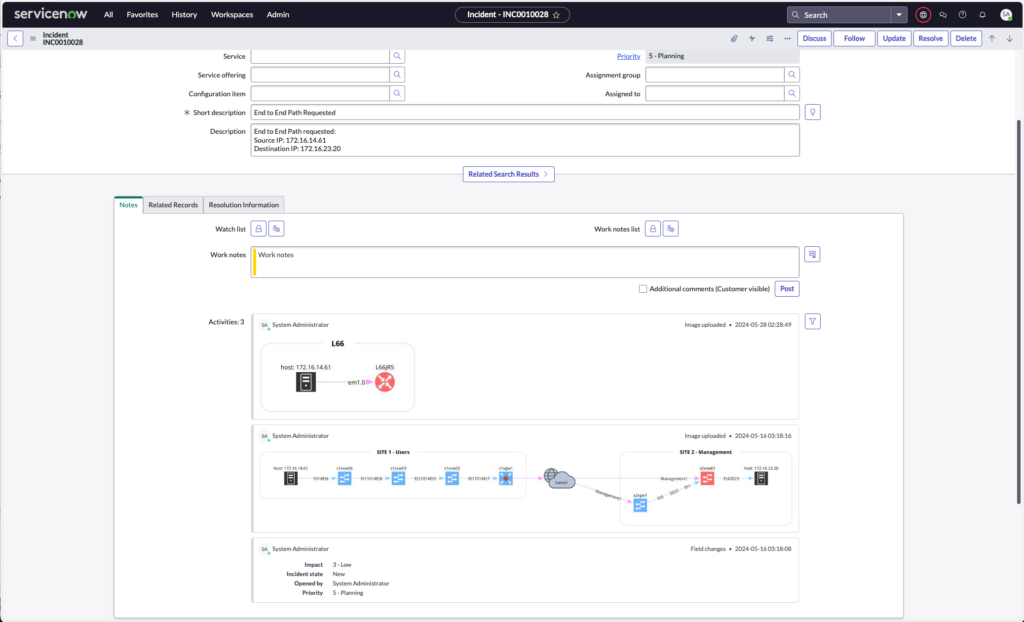
IP Fabric automates asset management tasks, including comprehensive discovery and inventory checks against the Common Vulnerability and Exposures (CVE) database to identify vulnerabilities. This ensures that network and information systems remain secure throughout their lifecycle.
2. Democratized Network Data for Corporate Accountability
With IP Fabric, complex and diverse network data is automatically normalized and made accessible beyond technical teams. This democratization of data ensures that management bodies have clear visibility into the state of the network, making it easier to oversee cybersecurity measures and fulfill reporting obligations. The platform’s exportable reports and integrations with tools like Grafana and Power BI enable seamless sharing of network status with stakeholders.
The nature of modern enterprise networks is multi-vendor, distributed, and technologically diverse; parsing this disparate information into what business leaders must know requires automation to keep pace with compliance needs.
3. Access to Network Intelligence for Reporting Obligations
IP Fabric’s regular discovery snapshots provide a historical record of your network state, essential for incident post-mortems and proving remediation efforts.
Having a record of what your network state was at the time of an incident, and proof of what it looked like post-remediation, will be key to upholding reporting obligations.
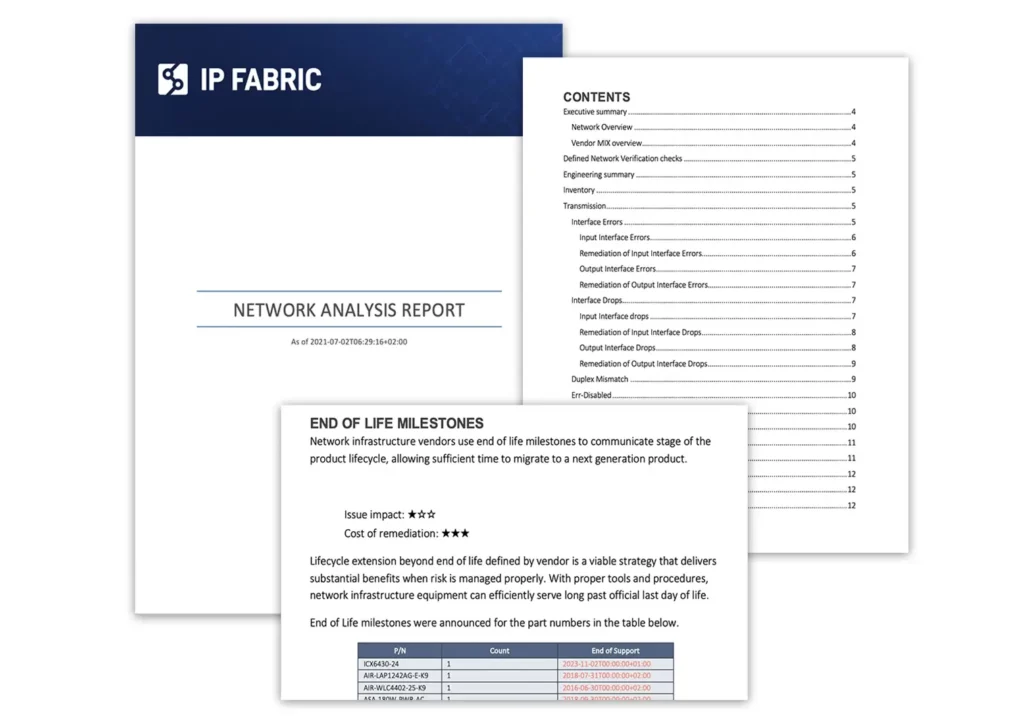
Samples of Automatically Generated IP Fabric Network Analysis Reports
4. Continuous Validation of Business Continuity Plans
The platform also supports business continuity by validating that network redundancies and disaster recovery plans are functioning as intended.
Continuous validation of network state post-change and assuring that all traffic flows are operating as expected based on network intent rules means peace of mind for network and security teams fighting constant change and a growing attack surface.
Access to End-of-Life and End-of-Support milestone information, as well as suggested replacements, ensures you can forecast network hardware replacements proactively, with no interruptions to business continuity.
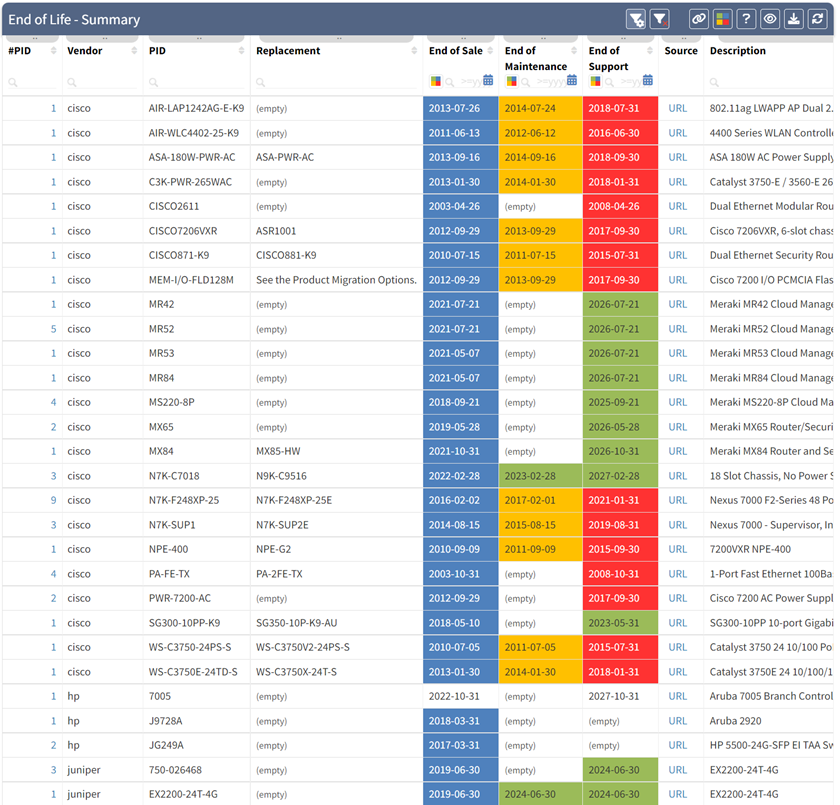
End-of-Life Inventory Information in the IP Fabric Platform
Transforming Compliance Burden into Strategic Opportunity
Complying with NIS 2 doesn’t have to be just about meeting regulatory demands. With IP Fabric’s automated network assurance, organizations can turn compliance into a strategic advantage. By eliminating manual data collection and analysis and prioritizing compliance automation, IP Fabric allows organizations to focus on proactive security measures and continuous improvement of their network infrastructure.
As the cybersecurity landscape continues to evolve, and your business expands, staying ahead of compliance requirements like NIS 2 will only become more difficult as your attack surface grows. IP Fabric provides the tools needed not only to pass audits, but to proactively address your network security posture with continuous oversight, ensuring that your network remains secure, resilient, and ready for the future.