Get the visibility to scope, plan, and implement major projects. Ensure resilience and cost savings every step of the way.
Transcript: Refreshes, Migrations & Deployments
Refreshes and migrations require careful
planning, change management, and
governance. Cost savings in the millions
can be realized by better managing
timelines, vendors, and international
procurement. Here we will look at how IP
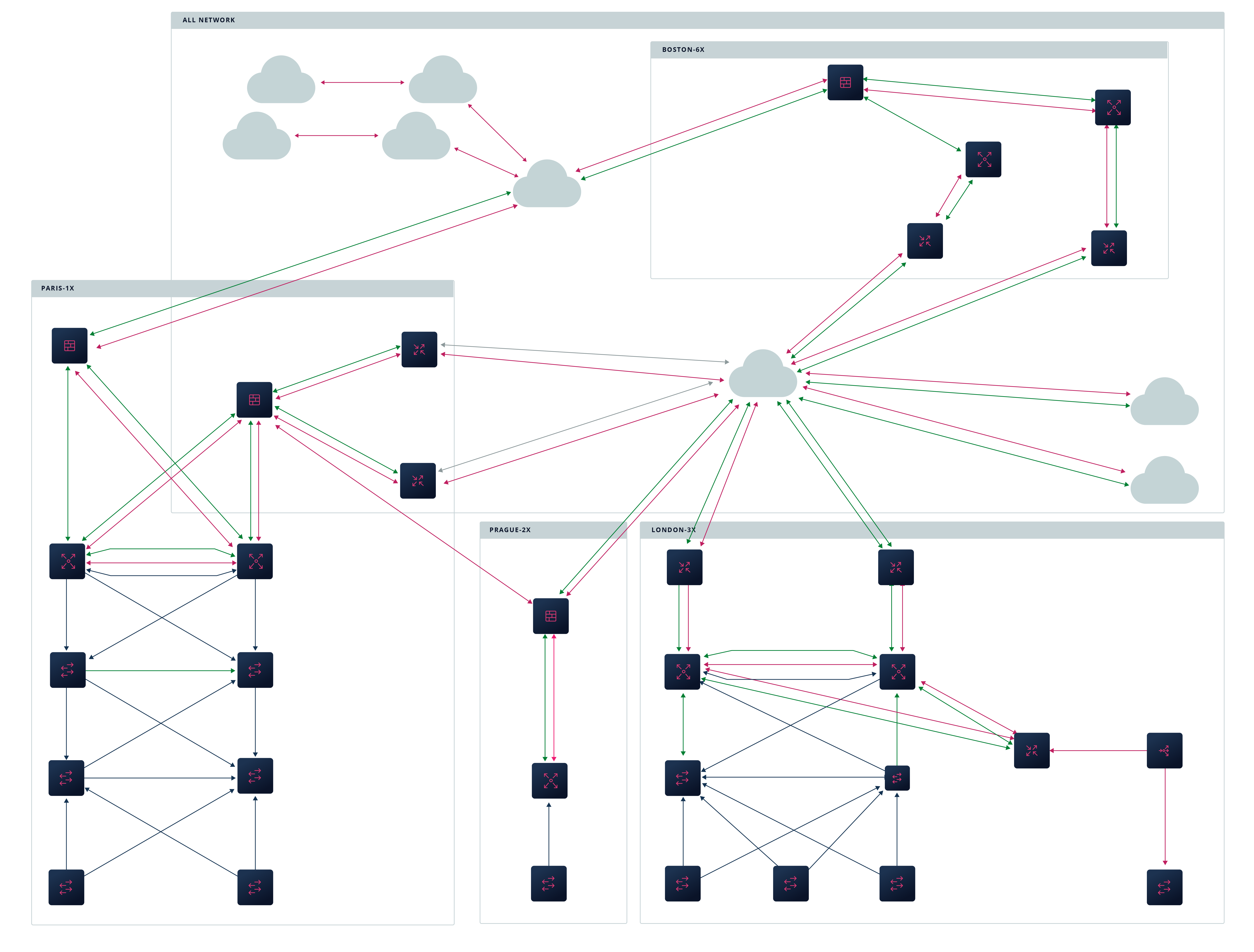
fabric helps plan a simple refresh. So
when we look at our planning process,
part of that is understanding
what on the network actually needs to be
replaced. And so a lot of that time we
do that by identifying end of life or
close to endof life devices. IP fabric
makes this simple in that our intent
checks on our dashboard are predefined
to look for end of support or end of
sale devices. No user input required
from the customer. So in this case in
our environment we can see that we have
18 devices that are nearing or end of
life detail. So we give this to you
based on the host name, the site that
it’s in. will actually show you the part
number affected and if there’s a
replacement part number from the vendor
that meets the spec along with the end
of sale, end of maintenance, and end of
support dates with the URL from the
supporting vendor showing the actual URL
announcement.
So with that information we can take and
apply that to a change control process
for procurement and then setting up the
stage for replacing these uh components
in a timely manner. Furthermore, when we
look at our inventory of the devices,
we’re not just categorizing devices by
name and site and IP address. We’re also
actually uh inventorying the device from
a standpoint of the actual configuration
of the device. So we can look at the
type of interfaces we have. Are they up?
Are they down? Are they connected? Do we
have GBIX or SFPs installed, right? Uh
MTU state. Uh if you’re using line
bonding technology like LACP, uh we’ll
also denote that as well. We can also
come in and show things like your uh
VLAN configuration, switch port, so is
it an access port, is it a trunk? Uh and
then anything regarding your spanning
tree configuration. So we not only can
show you end of life, we actually give
you the detailed information
regarding the configuration of the
devices that we’re replacing. And so
when we’re procuring uh the similar
devices, we need to make sure we have
the same number of interfaces, same type
of interfaces of at least uh the same or
better.
So when we uh dovetail this with not
just showing you what you have on your
network, what your network looks like is
we also have the capability uh and we’ll
show you a a concept of a self-service
portal here. So what the self-service
portal does is allow us to
self-provision. So maybe I’m a
networking person and I want to
provision a VLAN. So I can come in here
and choose my site. So let’s say Paris,
we’re going to be upgrading some of
these devices that we saw earlier that
were end of life. And I want to specify
a VLAN. And we’re going to call this
maybe a SQL prod. So, we’re going to be
installing or building out a new SQL
farm. So, we’re not only installing new
servers, but we’re going to be upgrading
the switches and all the routing and
firewall components into this network.
And I’m going to choose, let’s just
choose a an available subnet.
And I will give an explanation and who’s
requesting this. And you can see we’re
going to validate uh with IP fabric. So
we’re going to show you that the VLAN
155 is not being used on the network and
IP fabric understands this because we’ve
crawled the network. We understand all
the networking configuration of all the
devices and that the subnet of
17216220/24
is not present in any of the routing
tables and it is available and we can
report this to Netbox for our single
source of truth. Thank you for watching.
Please reach out to How we can help you
and your procurement teams save time and
money during your refresh.