Execute routine and large-scale changes while maintaining governance, resilience, and security.
Transcript: Planning & Change Management
When you close the network and cloud
visibility gap, planning and change
process become easy. In this demo, we
will show how IP fabric is used from
planning to change validation,
integrating with Service Now for ticket
creation, automatically providing test
and contingency plans, kicking off
Ansible playbooks, and validating
changes are as intended.
So when we look at our portal, we have a
self-service portal that we’ve built
here. So this just shows you the
possibility that can be done in any
environment.
Let’s just say we want to use a firewall
rule change. So this is my workstation.
This is my server. I’m the server
administrator.
And we’re just going to say I require
RDP access.
Now we understand obviously maybe we
don’t want to allow that per se but IP
fabric will be integral in this is that
we observe the network. We’ve already
mapped out the network. So what we can
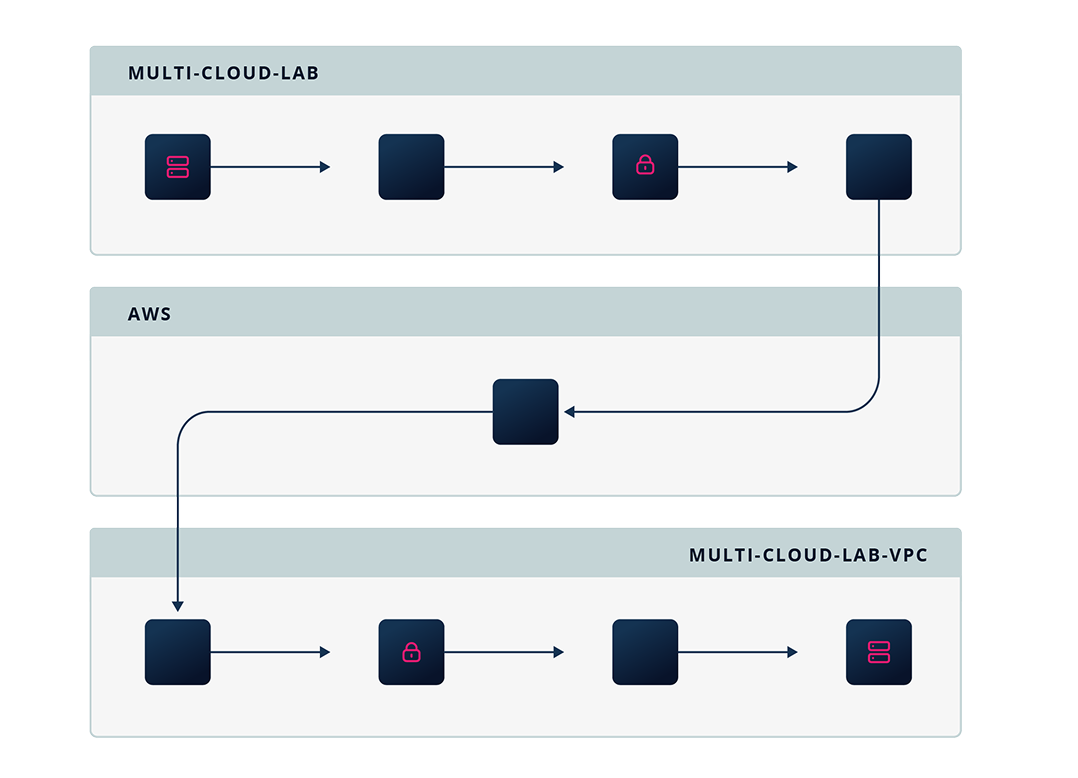
do here is an endtoend path mapping from
source to destination and we see that
there are two firewalls in between that
have policies that are enforcing a block
of RDP. So we need to actually enable
this. So here’s our full path 13 hops
with two firewalls, one in Paris, one in
Prague that are blocking this. So we
need to actually create a script to
allow source and destination uh TCP
3389. So this is from a user
perspective. Just going to come in here
and review the change and submit the
request. So what we’re going to do is
with our uh deep integration with
service now is we can only we can use uh
service now not only as a CMDB but we
can also uh submit ticket information
and ticket requests. So if I come in I
just click the link view my ticket. So
this is my service now request you’ll
see that RDP access requested by me.
Now, some of these are flat file
answers, right? But you’ll see a
justification, implementation plan, uh
risk and impact analysis, a backout
plan, and a test plan. So, these are all
things that are typically required in a
change control process. So, now this
change or ticket is waiting for
approval, which is good. And we can come
in and look at the uh firewall rule
deployment inside of our Anible
instance. Right? So when we look at here
now the firewall rule deployment as soon
as that ticket is uh approved then the
anible administrator can come in here
and just launch this uh rule deployment
and both of those uh you know firewalls
will allow the traffic.
So we can simulate then the applied
change just from a uh postchange
validation. So what IP Fabric’s going to
do is uh look at that and say okay if
the firewalls were permitted and by the
way internally maybe we have a a PCI
compliant uh or some other uh thing that
we don’t want to allow insecure
protocols which RDP would be assumed but
we can also note that in the ticket and
also kick off a violation detail. Um and
then we basically look at the path
comparison before the before the
snapshot and uh after the snapshot.