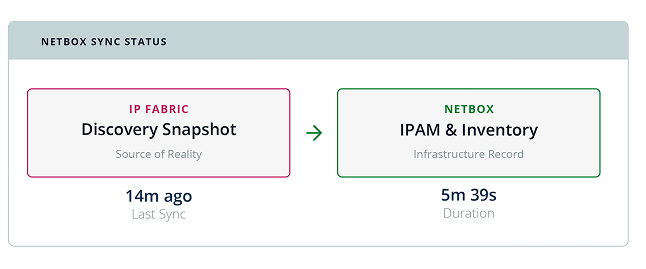
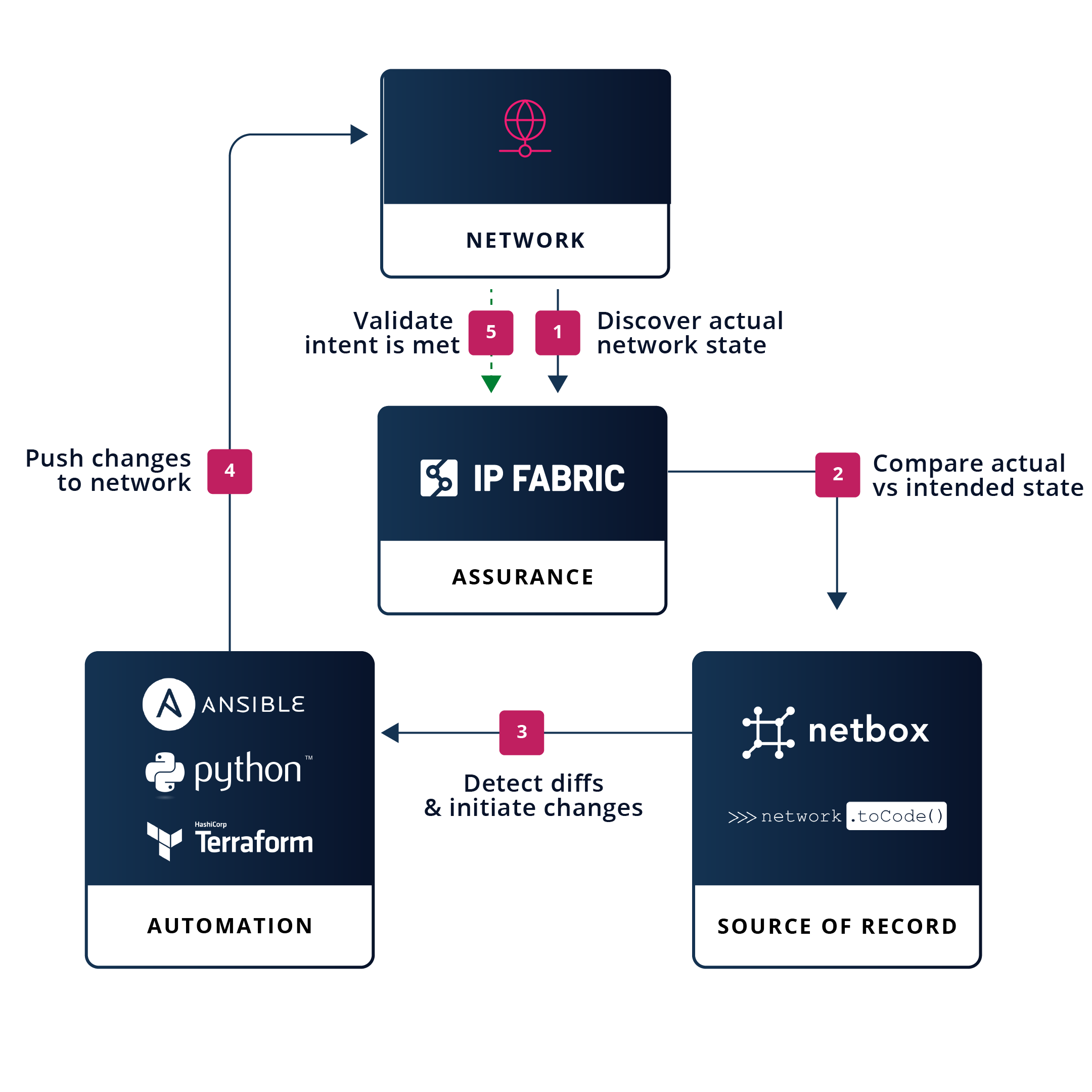
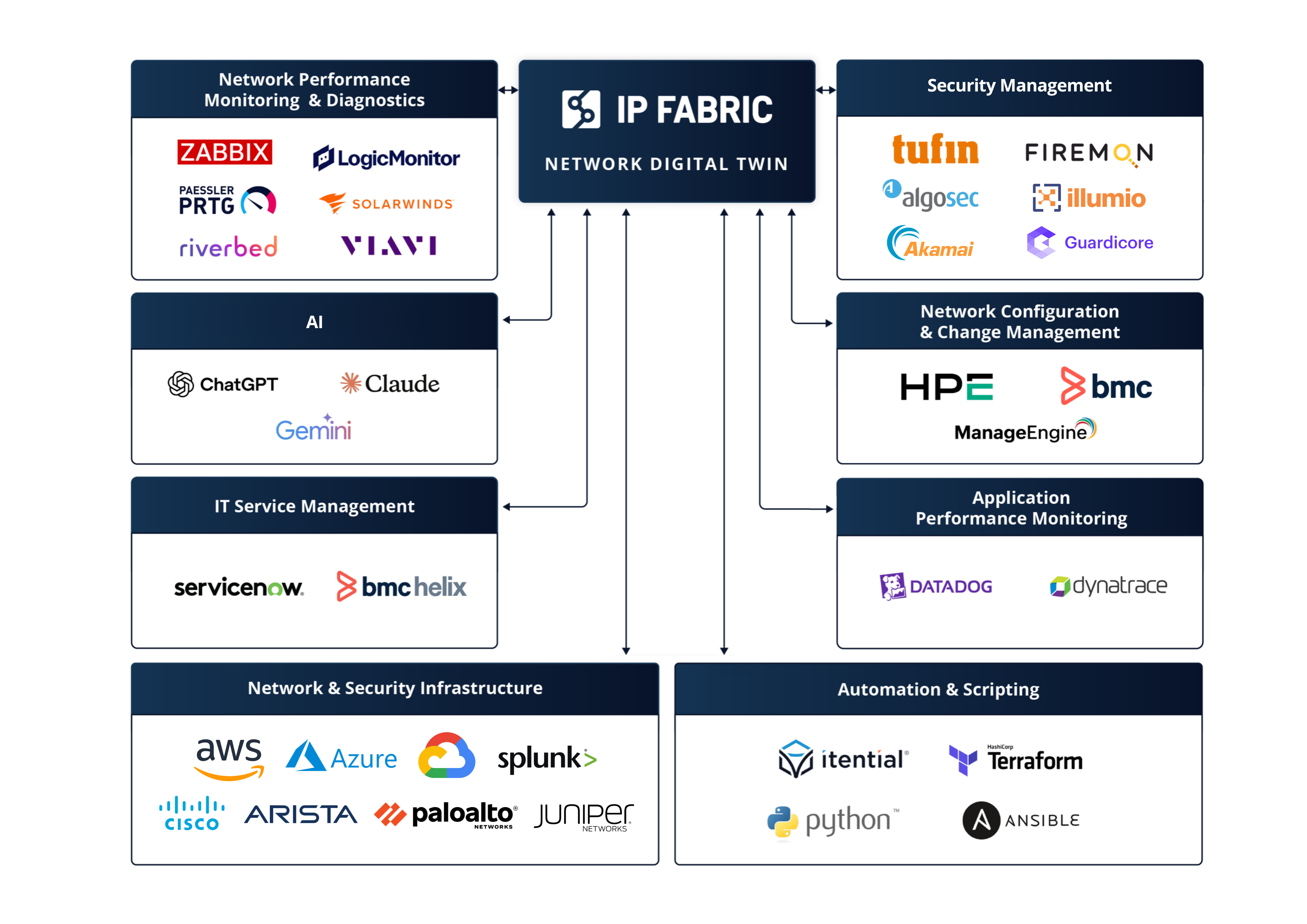
Continuously validate your network Source of Truth (SoT) or CMDB against an application-aware network digital twin.
Transcript: Source of Truth Accuracy
Tools like netbox, not service now or
even Excel are your sources of intent,
often called your sources of truth. They
tell you what your network is supposed
to look like, whereas IP fabric shows
you what’s actually there using its own
CLI and API based discovery. It builds a
complete and accurate picture of your
network and cloud environment, not
what’s documented, but what’s actually
running in your infrastructure.
And we know the network keeps changing.
But the question with those changes, can
you actually still trust your source of
truth or your CMDB?
In this example, you can see some asset
in service now that haven’t been updated
in quite some time. Now, can you trust
the information that we’re seeing in
here? Probably not. Do you know if
everyone in your organization is
following all the correct processes to
update this information as soon as it
needs updated? Now what we’re seeing is
devices that have been automatically
updated by IP fabric in service now. So
now if we look at this device and check
its serial number it OS version now we
know it’s accurate but we’re not just
bringing this for IP fabric we’re also
bringing the relationship between other
devices
the parent and child relationship which
helps us building the dependency
mapping. So now we know if something
affect that device what could be the
other impact. Going back to IP fabric
now we’re showing the v the vis the
diagram of your infrastructure. So again
IP fabric is not just about extracting
information about individual devices but
it’s really understanding how they
interact with each other.
So now what you have is it’s not just an
inventory of your infrastructure but
it’s really an understanding of how it’s
been built
and all this without having any manual
effort to do once the discovery is done
you would see all that information
that same accurate model IP fabric build
is also what customer use to build the
compliance dashboard and evidence
auditor ask for that we will show in
other use cases. is
sources of truth need IP fabric to
provide a complete and accurate
understanding of network behavior and
uncover the differences between intent
and the actual state of your network and
cloud environments. That gap between
intent and reality is drift and you
can’t fix what you can’t see. IP Fabric
detects it automatically so it never
goes unnoticed.